Carine’s Camino Journey – Day 3 & 4
El Acebo to Ponferrada (Rest Day)
Leaving El Acebo on a soft muddy pathway — after getting caught in the rain walking to dinner the previous evening — made for a much easier descent to Riego de Ambrós and Molinaseca.
After just 3km we reached a wonderful coffee stop: El Paraiso, a converted caravan serving vegan, natural, home-cooked food. The owner was super friendly, spoke English and French, and was exactly the kind of human you want to encounter before a long descent.

El Paraiso
Molinaseca — An Arrival Worth Every Step
Down into Molinaseca, which sits at the bottom of the descent from the Cruz de Ferro. After the exposed mountain, the steep rocky path, and the relentless downhill, this riverside town with its Romanesque bridge — the Puente de los Peregrinos, the Pilgrim Bridge — is exactly what you need. It feels, genuinely, like an arrival.
We crossed over the Río Meruelo and continued on towards Ponferrada — a flat, suburban 7km stretch along the river valley. The mountain drama was behind us (for now), and ahead lay the Bierzo valley.
Welcome to Bierzo
Bierzo is a picturesque wine region known for its stunning landscapes and unique combination of geographic features — mountains, valleys, rivers — that create diverse microclimates and, happily for pilgrims, exceptional wine. The local house and table wine, both white and red, are superb. Consider this fair warning.
Ponferrada — Carpets, Castles & Crusaders
As we entered Ponferrada — the capital of the Bierzo and the largest city between León and Santiago — we noticed decorations on the old bridge and suspected we were about to witness something special.
We were right. The colourful path lining the bridge was a traditional alfombra (carpet) made of dyed sawdust, sand, and flowers — intricate designs created by local residents to honour the Corpus Christi procession. The text woven into the design, “Octava de Corpus”, confirmed the occasion. A beautiful, labour-intensive tradition that transforms the streets into temporary works of art. Unfortunately, we didn’t stay to witness the procession itself — but the alfombra alone was worth stopping for.
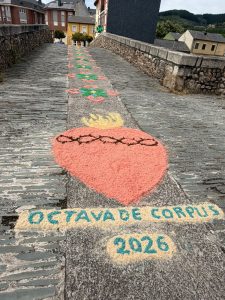
A close-up view of a traditional alfombra on a stone bridge in Ponferrada
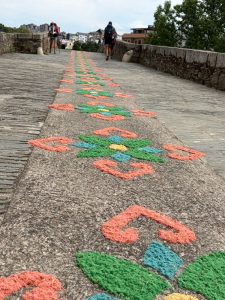
The Templar Castle
We did, however, visit the Castillo de los Templarios — one of the largest and best-preserved Templar castles in Europe. It dominates the old quarter from its hilltop position above the Río Sil, and it is so imposing it feels like the set of a high-budget fantasy film. The perfect place, in other words, to briefly forget you are a blister-ridden walker and pretend you are a noble knight.
Views from the Castillo de los Templarios
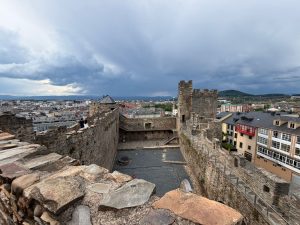
Castillo de los Templarios in Ponferrada
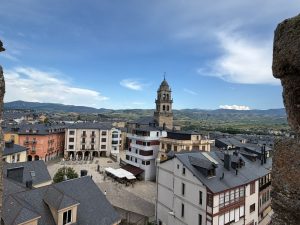
View through the stone walls of the Castillo de los Templarios in Ponferrada
The Rest Day
Spending a rest day in Ponferrada was a glorious exercise in contrast. You trade your dusty boots for local Bierzo wine and tapas, wandering from the shadow of ancient, brooding crusader walls to the quiet hum of a town that knows exactly how much a weary pilgrim needs to sit down, eat something delicious, and stop looking for yellow arrows for twenty-four hours.
We highly recommend it.
All our Camino posts are part of an ongoing series. Follow along on our Social Media Pages.